Showing posts with label copyright infringement. Show all posts

Thursday, August 12, 2010

Last gasp of Sun's semi-openness

Throughout its lifespan, Sun always had a schizophrenic view of open standards. Some of the things it did were very open, like giving away specs and/or implementations of things like RPC and NFS. Some of the things were traditional proprietary licensing models — akin to Microsoft or Intel — with SPARC chips, Solaris and the like.

On the other hand, Sun’s use of open source was always semi-open, as I noted in 2003 in my most oft-cited open source paper. In fact, Sonali Shah (now of U. Washington) coined the term “gated source” to refer to Sun’s use of open source-like approaches inside an extranet during the past 15 years or so.

While Sun eventually embraced open source, its opening always seemed like too little, too late. Certainly during its entire lifespan, Sun’s was at best semi-open — a combination of (as I put it in my 2003 paper) “partly open” and “opening parts”.

The crown jewels of Sun during its final decade was the Java programming language. One offhand estimate I heard was that Sun spent more than $1 billion in R&D on Java before it was gobbled up by Oracle, but that number seems low.

Now Oracle (owner of Sun’s IP if few of its former leaders) is suing Google for its independent implementation of Java in the Android platform. Since neither the IP nor the alleged infringement has changed since the first Android phone shipped two years ago, the lawsuit seems driven more by the change in management than a change in IP use.

Oracle is represented by David Boies, who once helped sue Microsoft for antitrust violations but more recently represented SCO in its suit against Linux and IBM.

The Merc sees it as a negotiating ploy:

While Redwood Shores-based Oracle did not specify the amount of damages it will seek, one analyst said the stakes could be high. But he also suggested the lawsuit may be a strategic move by Oracle in the course of a larger negotiating effort.

"At the end of the day, it could mean a fair amount of money," said Al Hilwa, a software industry expert at the IDC tech research firm. Based on other similar past disputes, he added, it's likely that the two companies have been negotiating quietly for months.

"Going public with a lawsuit may well be part of a strategy by Oracle for trying to force the issue," Hilwa said.
In contrast, ComputerWorld quotes a Gartner analyst who (correctly) suggests that Oracle will have a hard time making a case:
When Google developed Android it included a Java compatible technology called Dalvik with the phone OS. Dalvik was developed as a "clean room" version of Java, meaning Google built it from the ground up without using any Sun technology or intellectual property, said Gartner analyst Ken Dulaney.

"You can't just take a Java application from a Sun environment, where it's licensed, and run it on Android. You have to recompile it to Dalvik," Dulaney said.
The cleanroom process is almost 30 years old, used for hundreds of clones of the IBM PC, Adobe’s PostScript interpreter, and many other copryighted software technologies owned by litigious wealthy IT companies. When used properly, it is very effective — which is why Dell and HP are shipping more Wintel PCs than IBM, which dumped the business it created.

If Google used this process, Oracle faces a nearly impossible task of proving copyright infringement. If it didn’t — with all its brains and resources and lawyers and egos — then certainly it deserves to pay whatever a jury hands out in a courtroom.

In fact, Android does not have a complete Java implementation, but the Java language syntax with a different set of APIs that brought heartburn to Java programmers (and Sun).

I don’t know much about the Java patent portfolio, which is potentially a more seriously threat to Google since a cleanroom or independent invention is no defense for patent infringement.

I was curious to find no record of Sun asserting Java patents against other firms, at least openly. The only Java patent litigation I could find was a $92 million settlement in 2004 by Sun in favor of Kodak for Java infringing patents created by Wang Laboratories (and bought by Sun)

Certainly there have been at least limited Java clones, including HP’s MicroChai in 2001, which apparently shipped in a few HP devices.

So does Sun/Oracle have a weak case? Has it been using the patents behind the scenes to win royalties or eliminate competing Java implementations?

However, the fact that Sun has patents to assert over Java implementors shows that it always intended the Java platform to be semi-open, and that its abortive effort to make Java a truly open standard was never intended to give up control.

Tuesday, January 19, 2010

Freemium solves an annoying little problem

Last August, I discovered a new TV series on ABC called Defying Gravity. It had its faults: some called it “Gray’s Anatomy in outer space” although that ship sailed two decades earlier with LA Sex Law, which introduced the genre of the oversexed workplace to the American TV viewer psyche. Still, Defying Gravity was one of the first new sci-fi shows on broadcast TV this century. (I’ve been ignoring the V remake since the first one wasn’t all that good and the accounts make this one sound worse.)

Parenthetical comments aside, I was enjoying Defying Gravity until ABC pulled it after airing 8 episodes in August and September. The CTV-produced show (filmed in Vancouver) finished its 13 episode run in Canada (eh) although CTV stopped its Facebook page after 8 episodes.

Since tonight was the first night this week I had no lame “24” episode to watch, and since Comcast yanked my SyFy (and Stargate episodes) as it deliberately sabotages basic cable, tonight I went looking for Defying Gravity. Thanks to Google, I found it.

The Canadian over-the-air broadcasts are available commercial free on Ninjavideo.net, apparently redistributing content from Megavideo.com. (They appear to be related sites). Megavideo is using a freemium model and both are trying to upsell me from the free to paid version, but I’ll take the free viewing of 72 minutes/day. And if they get insistent, I'll try one of the Russian sites that claim to have it.

Both sites seem less than totally reputable, and I mean beyond distributing someone else’s pirate video without permission. (The latter category also includes Eric Schmidt and GooTube as well as VC-funded last.fm.)

I don’t play pirated MP3 files and normally I don’t watch pirated video. But after waiting 4 months for ABC to make good on its promise that the show would be back (although it’s now deleted from its show website), I’m hoping most would forgive me for concluding that ABC’s “someday” really means they are using the recursive mañana principle.

So at least I’ll be able to watch the Antares astronauts of 2052 visit a planet and wrestle with their personal demons. The rest of the backstory (and their Grand Tour of the planets) is apparently only known in an alternate universe where sci-fi shows get good ratings.

Saturday, March 21, 2009

Fair use quandary

The copyright “fair use” dispute continues between the AP and its freelance photographer Mannie Garcia — who took a 2006 photo of then-Senator Barack Obama — and poster artist Shepard Fairey, who has sold thousands of T-shirts and other nick-nacks with his colorized version of the Obama photo. (There’s even a Flash 10 website where you can colorize your own photo).

It is not clear how much Fairey has made off of the Obama image. Six months ago, the estimated pretax(?) profit was $400K, but that must be much higher by now. From one rendering alone — an inaugural poster — the gross revenues would be $1.4 million if it sold out. It seems like a conservative estimate of the gross revenues would be $3 million or more, with gross margins of 50% or more.

The AP countersued Fairey last week, saying that the artist had broken off discussions of licensing rights to the AP photo:

The cooperative said it tried to work out a license agreement with Fairey and agreed to donate proceeds from his prior use of the photo to a charitable fund that helps AP staffers who suffer personal losses in natural disasters and conflicts. Fairey cut off negotiations, the AP's lawsuit said.
The most detailed legal argument can be found from Carolyn Wright at her Photo Attorney blog. Some representative commentaries thus far:
  • For Fairey and derivative works: Erick Schonfeld on TechCrunch, Larry Lessig (whose lawyers are representing Fairey)
  • For the AP and copyright: Dan Wasserman of Boston.com.
  • A plague on both their houses: Joel West of you who who.
  • Strangely silent: IP law professor Mike Madison and friends at Madisonian.net; are they reluctant to criticize their friend and colleague for his efforts to use “free culture” to kill IP law once and for all?
On Monday, publishing executive and amateur IP economist L. Gordon Crovitz weighed in on the controversy. His “Information Age” column in the WSJ continues to grow in my estimation, as one of the few places where the economic realities of information business models are considered without predictable pandering to one side or the other.

Crovitz also starts out with the “plague on both their houses” approach, but eventually sides with the AP. While this might seem predictable for the former WSJ publisher, his version is far more nuanced than last Friday’s plea from ABC News president (and AP board member) David Westin.

Crovitz seemed offended by the scofflaw approach by the nominal artist:
As for Mr. Fairey, instead of agreeing on a licensing fee, he worked with Stanford University's Fair Use Project to sue the AP, claiming that the poster was fair use of the photo. The Stanford group, founded by Lawrence Lessig, favors fewer protections for copyright. In Mr. Lessig's recent book, "Remix," he rightly criticized many copyright claims. He cited the lawsuit brought by Universal Music against a woman for posting on YouTube an amusing clip of her infant dancing to a song by Prince. There's no opportunity to license snippets of songs and no harm done to Prince.

But this case is different. The AP and Mr. Garcia make their livings selling their work. As a reader commented on Mr. Lessig's blog, "I don't think photographers, professional and amateur, are going to appreciate free-culture types saying that their work is not creative since it only took a second to snap a picture."

The less-copyright-is-always-better crowd has an odd champion in Mr. Fairey. He earned street cred by being arrested for graffiti and uses imagery from Che Guevara and the Black Panthers, but such rebellion is now so establishment that he designed a current ad campaign for Saks Fifth Avenue. He and his lawyers often complain about alleged infringements of his copyrights by other designers.

Digital technology complicates copyright, but technology doesn't override the importance of showing respect for the work of others.
Claims of fair use reiterated from Feb. 5.

Thursday, February 5, 2009

Obama poster: AP, IP, and FU

The late night news had a hilariously ironic story about the money artist Shepard Fairey made off of the most famous poster for Sen. Obama’s. The Associated Press is suing the artist asking for a piece of the action.

As the AP reports on AP’s dispute:

"The Associated Press has determined that the photograph used in the poster is an AP photo and that its use required permission," the AP's director of media relations, Paul Colford, said in a statement. "AP safeguards its assets and looks at these events on a case-by-case basis. We have reached out to Mr. Fairey's attorney and are in discussions. We hope for an amicable solution."

"We believe fair use protects Shepard's right to do what he did here," says Fairey's lawyer, Anthony Falzone, executive director of the Fair Use Project at Stanford University and a lecturer at the Stanford Law School. "It wouldn't be appropriate to comment beyond that at this time because we are in discussions about this with the AP."
This story works on so many levels. There are no clean hands, and is much like Captain Renault saying he is “shocked, shocked” to discover gambling in Morocco.

AP is the same AP that has spent the last five years taking text and image content from its dying newspaper members — who spend most of the money in the US to gather it — and then providing it to the same companies (i.e. Google and Yahoo) that are putting newspapers out of business.

Meanwhile, in an interview with the artist, Fairey used laziness (rather than scholarly or artistic license) for using the photo without rights.
…the idea of hijacking things was almost part of the concept rather than it being looked at as appropriation or plagiarism. It's like, "F*** you if you don't like that I'm using this, 'cause I'm using it anyway. I have no money and no power so you can't get anything from me anyway." …

Aspects of that have remained with me. When I did my Obama image, I just found my image from an AP news photo on Google and illustrated from that. There was no time to get Obama to do a sitting or license a photograph. I felt I needed to get the image done and out there right away. So part of that is still with me.
Finally, this seems to be encouraging rather than discouraging even sillier IP ideas. According to the LA Times, the administration is trying to control all rights to the president's image
The Ticket also reported the other day that White House lawyers are exploring ways of protecting the copyright of the new president's image like this. And we said good luck with that around the Obama-loving world.
This is coming from the administration that talked about openness and reportedly is interested in an open source mandate.

Besides the PR problem of such a ham-handed effort, there is also the issue of legal feasibility. While I defer to real lawyers, I suspect this image control strategy is doomed to fail: it was tried by our Governator here and only achieved minor success.

Photo credit: AP photo and Fairley poster used under a claim of fair use; the latter was redistributed by AP without prior license (presumably under a claim of fair use).

Tuesday, October 28, 2008

Google: somewhat less a copyright scofflaw

Google has a reached a settlement with book publishers and authors that objected to its unilateral decision to scan their copyrighted works and give limited amounts of content away to the world with the Google Books program. The settlement, which includes a $125 million payment, settles a three-year-old lawsuit against the four-year-old service by the Authors Guild and the Association of American Publishers.

Google has posted online the official announcement and the official spin. The publishers have their own, more detailed FAQ. As the WSJ notes, the settlement is not yet final:

If approved, the agreement would expand online access to millions of in-copyright books and other written materials from the collections of libraries participating in Google Book Search - a project intended to make millions of books searchable via the Web - while also compensating copyright owners for allowing online access to their works.

Google's $125 million payment will be partially used to establish a Book Rights Registry under which holders of U.S. copyrights can register their works and receive compensation from institutional subscriptions, book sales and ad revenues. The settlement will also be used to resolve existing claims by authors.
The actual settlement seems a masterful compromise of rights. It could even serve as a precedent for settling Viacom’s lawsuit against YouTube.

Under this proposed solution, Google (which knows how to index information and run online systems) will sell access to pages beyond the free ones and share the proceeds with the copyright owners. This could be a new, permanent business model for IP holders to obtain compensation for their copyrighted material and thus compensation (and an incentive) for their time and efforts.

While that is all good, I’m still distressed by how we got here. This goes far beyond the Guy Kawasaki mantra of “ask forgiveness, not permission.”

Instead, it’s more like “I’m doing what I damn well please: if you don’t like it, sue me!” Or more precisely “I will unilaterally determine what is a proper use of the IP of others and act accordingly, without waiting for a license or any other agreement with the IP owner. The only recourse of those who disagree is litigation.”

This of course reflects the hubris of billionaires (with their own private 757) who feel entitled to effect social change on their own time schedule. So far all we have is a vague promise of good intentions (“do no evil”). Worse, there’s something profoundly undemocratic about such arrogance: it’s not a big leap from that sort of behavior to a band of oligarchs who decide to run a country.

My favorite new song stealing site

Since 2000, a buddy and I have had a never-ready-for-prime-time garage band: two guys covering 70s music without an audience (unless you count our daughters).

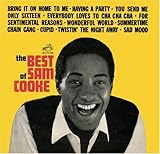
Over the weekend, we were trying to learn a classic Sam Cooke/Lou Rawls tune, but neither of us had the MP3 file. (When I got home, I bought the MP3 file from Amazon).

So my buddy said, “let’s try Project Playlist.” Sure enough, it had a wide range of versions of the song available for streaming — all free. The search image would link to the various websites that had copies of the song for us to hear.

The company apparently isn’t paying royalties to the record companies. This seems to be the model for a startup based on redistributing other people’s content (like Deezer or GooTube): launch your company, distribute content, solicit revenues, and figure out how to pay for your inputs later.

It’s no wonder that the RIAA sued Project Playlist in April. The company’s defense (as quoted by CNET):

“We make it easy for our users to create a playlist that points to a series of music files hosted on third party Web sites,” Project Playlist said on its site. “We do not control those third party Web sites. We do not host music files.”
This is exactly the same loophole as SurfTheChannel attempts to use for videos.

The company has high powered lobbyists and is trying to negotiate a deal with Sony BMG, and (it hopes) eventually the other three members of the Big Four.

We also tried last.fm, a legal interpretation of the same theme. At last.fm, we didn’t find Sam Cooke, but did find an Eric Clapton cut (which was on my laptop but not my buddy’s desktop).

Last.fm has a sugar daddy in the form of CBS, which spent $280 million to buy the company last year to diversify its radio properties. It otherwise seems unlikely they could make money given the onerous RIAA royalty schedule for music streaming.

Neither firm seems like it has a viable longterm business model. Consumers love it, but revenues are limited, other than the capital gains from selling out to the greater fool. But this is worse than even the typical troubled Web 2.0 startup, which at least has low costs due to user-generated content.

The problem is that online music startups have no control over their most important input. All the valuable content is owned by the Big Four labels, which thus has the unilateral right to dictate prices. Hollywood is furious at losing its high vinyl/plastic margins and is hoping to extract the same margins from online sales. It is a futile hope, but it will take years (if not decades) for Hollywood to come to terms with the Brave New World and adjust its expectations accordingly.

Saturday, August 2, 2008

As if GooTube weren't enough

The entire GooTube business model is based on taking other people’s content without paying for it, and then giving it away. Viacom doesn’t like having its content stolen, so someday a higher court will let us know which one is right.

But while attending the workshop Friday, I found out about yet another stolen video content site: SurfTheChannel, which tries to use two loopholes to avoid lawsuits by Viacom et al.

First, SurfTheChannel is based in Sweden and thus claims to be immune to the DMCA. Secondly, it disclaims liability because “SurfTheChannel does not host any content on it\'s Servers.”

YouTube today is 425x344, while 1080i would be 14x as much data. However, storage costs and bandwidth and improving so fast that movie publishers are increasingly facing the same download problems that music publishers have been dealing with for the past decade. These sites are even further examples that fighting IP piracy on a global Internet (given the inherent lack of global IP enforcement) is a Sysiphean task.

When we discussed the problem at the workshop, the conclusion was that content will have to be self-supporting, through approaches such as product placement or mid-roll ads. So if Ford pays all the production costs for a Toby Keith movie or music video with Ford F-150 product placement throughout it, then the producers don’t have to rely on any subsequent revenue streams from selling the views of the video. In fact, if the video gets given away on websites throughout the world, Ford will probably be even happier. (Ignoring for a minute that F-150 sales are miniscule outside the Americas).

Beyond the normal one-off product placement are Sears' sponsorship of the Bob Vila show and Extreme Makeover: Home Edition. These are far less subtle updates of the General Electric Theater and the Texaco Star Theater.

So is this the future of video production, when everything becomes an informercial?

“Louis, I think this is the beginning of a beautiful friendship.”

“Rick, how about a Lucky Strike?”

“Certainly. After all, Lucky Strike means fine tobacco.”

Tuesday, July 29, 2008

Unstoppable commodization of information goods

Information goods tend towards zero price for two reasons: one economic, one legal.

The economic argument is that the marginal cost of reproducing information is zero, and thus (as Yannis Bakos famously observed back in 1998) competition will eventually cause producers to sell their products at marginal cost, i.e. free. This is the ultimate outcome of commodization if there is nothing to prevent it — i.e. a cost structure that prevents self-defeating competition.

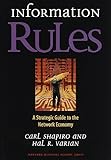
The same point is at the heart of the excellent treatment of information goods in the Shapiro and Varian book, Information Rules. It is also the nominal moral (and theoretical) justification for the argument “information wants to be free,” which is plaguing the newspaper industry.

However, the second reason for free is more practical: information is given away free because people can steal it. For more than a decade, we’ve called this the “Napsterization” of an information-based industry. New digital representations of technology make copying costless and error free. In this new digital regime, Napster (and Kazaa and BitTorrent) demonstrated that even if there are copyright laws on the books, enforcing them is another matter.

This was a topic of my first published academic paper (back in 1995), where I was thinking about the converse case — societies that didn’t believe in IP laws but might someday:

Societal attitudes toward intellectual property are less easily changed than a mere regulation, and enforcement of intellectual property rights depends as much on moral legitimacy as the enforceability of legal sanctions.
My coworker, Prof. Randy Stross of SJSU, wrote about a new area of copyright enforcement battles in his Sunday New York Times column: college textbooks.

The law is the same, but practical barriers had protected the textbook publishers thus far:
Compared with music publishers, textbook publishers have been relatively protected from piracy by the considerable trouble entailed in digitizing a printed textbook. Converting the roughly 1,300 pages of "Organic Chemistry" into a digital file requires much more time than ripping a CD.
There are even websites dedicated to stealing textbooks, like Textbook Torrents and Scribd.

As Randy points out, the textbook publishers have angered their customers through aggressive monopoly rent-seeking and extortionate practices such as planned obsolescence. While some of their responses (such as renting online textbooks) may reduce the incidence of piracy, others will just make things worse.

So the $100/copy prices are used to subsidize the manifest stupidity and inefficiency of their scattershot marketing process — i.e. the vast majority of losers in their catalogs. I have a dozen of sample copies of entrepreneurship and strategy textbooks on my shelves, sent to me unsolicited by publishers. I am no more likely to use them than I am to recommend the 4th best book on open source licenses.

With high up front costs and (relatively) low marginal costs, textbook publishing is like other media: the big winners are obscenely profitable and the losers have no hope of turning a profit. Thus, textbook publishers are exactly like record labels: they grew accustomed to high profit margins on winners both to cover their losers, but also to transfer wealth to shareholders and executives.

Without practical or legal protection, that business model will be as extinct as the dodo bird. It happened to CDs, it’s happening to textbooks, and movies are next. The publishers’ anti-piracy czar said “It is troubling that there is a culture of infringement out there.” No duh.

I’m really furious at both the publishers and these student self-appointed Robin Hoods, because together they are creating a generation of information pirates. To all these students studying organic chemistry: would you really prefer a world without IP — that instead of having a job producing information, you will instead have a job making things, delivering personal services or digging ditches? Is that really your nirvana?

A few of these pirates are socialists or crypto-anarchists deliberately attempting to destroy societal institutions. But most of these pirates are ahistoric teenagers without regard for economics or the law of unintended consequences.

At this rate, historians will someday look back at the 20th century as the high water mark for the value (and profitability) of information goods.

Friday, December 21, 2007

Next generation's IP train wreck

David Pogue had a very thought-provoking column today about self-enforcement of IP compliance such as copying disks and Napster-style downloads. He explains how he normally surveys his audiences on their attitudes towards copyright, finding that at some point his audience ends their self-serving rationalization and admits that certain activities cross over the line into IP theft.

This didn't happen at a recent talk at a college campus:

I just could not find a spot on the spectrum that would trigger these kids' morality alarm. They listened to each example,looking at me like I was nuts.

Finally, with mock exasperation, I said, "O.K., let's try one that's a little less complicated: You want a movie oran album. You don't want to pay for it. So you download it." There it was: the bald-faced, worst-case example, without any nuance or mitigating factors whatsoever.

"Who thinks that might be wrong?" Two hands out of 500....

[I know] that the TV, movie and record companies' problems have only just begun. Right now, the customers who can't even *see* why file sharing might be wrong are still young. But 10, 20, 30 years from now, that crowd will be *everybody*. What will happen then?
Anyone who teaches on a college campus has seen this coming, but Pogue's anecdote should wake up music (and now movie) industry execs into realizing that their days for building an ethos of legal downloads are numbered. And if this is the attitude of young people in the most IP-oriented economy in the world, this does not presage well for any IP-based business model.

Tuesday, September 4, 2007

GooTube as a role model

A friend of mine tipped me off to a new music streaming site, Deezer.com. It’s a relaunch of Blogmusik.net, a streaming site that was shut down by the record labels earlier this year for copyright infringement.

Deezer has an interesting business model: unlimited free streaming songs, paid for by ads and song click-throughs. Other webcast sites also try to do this, but (at least in the US) impose specific restrictions, like you can’t stream an entire album consecutively (so someone could just record it and download it) — companies like Live365 and Shoutcast.

The Paris-based Deezer has a license from the French music licensing agency SACEM – Société des Auteurs, Compositeurs et Editeurs de Musique. The press accounts don’t explain that SACEM only collects one type of royalty — as the name implies, the author/composer royalty (similar to ASCAP in the US).

However, Deezer has yet get a license for the performance of that music — paying the performers (e.g. a rock group). Those rights are usually held by the performers’ label, and thus requires negotiating (as would iTunes or any other service) with the label. Already, one of the major labels — Universal Music — has said non! to the plan. Oddly (given the usual French nationalism) Universal is the only French-owned major record label — having been sold by its Canadian owner Edgar Bronfman to French water company Vivendi.

So why is Deezer going ahead without a license from the record labels? Cofounder Jonathan Benassaya invoked the GooTube business model as his defense:

Asked if Deezer.com should have waited until the agreements were in place to launch the service, Benassaya countered that YouTube launched its service before it signed deals with content owners to distribute their video. He also said that Deezer.com has been operating since April and that only now has Universal raised its objection.
The Computerworld article also notes that Deezer is competing with Neuf (a Universal-licensed download service) which I’ll guess is the big reason that Universal is making a stink.

On this side of the pond, the Deezer launch must be galling (Gaul-ing?) to US Internet radio industry, which (unlike terrestrial radio stations) for the past five years has been paying performance royalties on all music streaming. The US Internet radio performance royalties (that Deezer is ignoring) are far more expensive than the composition royalties — the latest label demands are for 10-35% of total revenues, or potentially 6X that of the composition royalties. The new rates — set by a US copyright tribunal — would be retroactive to January 2006.

The stations (including many local NPR stations) lost all legal appeals, and have been negotiating past the July 15 expiration of their old license in hopes of getting a better deal from the labels. (Their next hope is that Congress will step in on their side — as promised if no deal was reached by Labor Day). Meanwhile, the record labels have asked for as much as 10% of revenues from financially struggling satellite radio companies.

The problem for the distribution of entertainment is that royalty rates are neither set by the market nor by government regulation. For the composition royalties, ASCAP and BMI come in and tell broadcasters how much more they should pay, and then a Library of Congress panel decides what is fair. The same process was used to set the last two rounds of Webcast performance royalties. The pricing of music downloads seems to be set by a small number of labels telling download companies (like Apple) what they will have to pay. Compared to this, the retail price of DVDs (where there is competition for user dollars) seems like perfect market competition.

Technorati Tags: , , , ,

Thursday, August 9, 2007

Good free riders and bad free riders

In the five months since I first wrote about GooTube, the controversies continue over its business model based on using other people’s IP without paying them.

Someone who follows the controversies more closely than I do is Prof. Michael Madison of the law school at the U. Pittsburgh. We met at a conference in January (just I was starting the blog) and compared notes about blogging as a productivity destroyer. His “Madisonian” blog is in my RSS reader because of a high ((quality+relevance)/word) ratio. Other IP Law blogs in my reader are more familiar sites like Groklaw, which certainly have important tidbits but are less succinct in their content.

Catching up with Mike’s blog, I noticed two updates of interest to my readers (whose numbers increased last week by 25).

First, he uses an allegorical tale about “free riders” to put the GooTube business model into perspective. (That the tale happens to be true makes it even better). I’m not sure I agree with his conclusions, but the issues he raises are important (and less obvious) ones to consider as lawyers, judges and politicians try to decide how to balance the rights of GooTube and content owners. (My own view is that so far the market seems to be working — content owners are voluntarily negotiating deals with Google, although success for the Viacom lawsuit would change the prices a little).

Second, he updates the important test of the “fair use” copyright doctrine of law school instructor (and former EFF affiliate) Wendy Seltzer. Seltzer has cleverly designed an experiment (lawyers would call it a “test case”) to challenge the absolute right of a content owner under the 1998 DMCA to demand removal of their copyrighted work from a website (in this case GooTube). (See my March 28 posting for the details of the controversy).

While protecting content owner rights is important, equally important is that copyright law has long provided an exception for “fair use”. I rely on that exception every time I quote a paragraph from someone’s website or news article. Since Seltzer is using the video clip for commentary — and since it has absolutely no commercial value — in my para-legal opinion it seems like this would be an open and shut case in her favor.

Seltzer has gone another round with the NFL, and Madison dissects the NFL’s latest legal manuevering. He is a lawyer (while I don’t even play one on TV) so the value-add is not just in the news story but in his explanation of what’s going on and what the likely consequences are.

Technorati Tags: , , , ,

Wednesday, July 25, 2007

What is the Chinese word for “kabuki"?

Tuesday, US and Chinese authorities announced seizure of a half-billion bucks worth of counterfeit US software. This is not like bootleg tapes from the back of a pickup at a U.S. swap meet. The NYT reported:

The F.B.I. and the Chinese identified criminal organizations producing and distributing counterfeit software in both Shanghai and Shenzhen. …

Microsoft’s 75-member antipiracy team had been tracking a Chinese syndicate since May 2001, when counterfeit discs of the Windows Millennium operating system were found in Southern California. Since the investigation began, Microsoft investigators have found 55,000 discs.

The Chinese syndicate thought to have been involved had 30 production lines. Based on its examination of the discs, Microsoft said a conservative estimate of the value of the software sold by the criminal group was $2 billion.
This reminded me of a (perhaps apocryphal) story I heard many years ago about a friend of a friend. My friend said his friend was the China representative of the BSA, the “anti-piracy” trade association for Microsoft and the other big software vendors. The BSA rep was supposed to be stamping out software piracy in China, but lived in Hong Kong and only went to China when the government staged seizures for publicity purposes. When he wasn’t in the presence of the police, he feared physical retaliation from the Chinese syndicates.

Of course, many people have argued for years that Microsoft is better off having its software stolen than have customer adopt (and thus develop switching costs for) competing software. I understand the arguments, and while I still am skeptical, they don’t seem as implausible as when I first heard them (from a marketing professor) more than a decade ago.

Technorati Tags: ,