Showing posts with label free markets. Show all posts

Friday, July 22, 2016

Innovation requires freedom

From the Wall Street Journal, July 22, 2016, p. A13:

The Closing of the American Mind
There are dangerous signs that the U.S. is turning its back on the principles of a free and open society that fostered the nation’s rise.

I was born in the midst of the Great Depression, when no one could imagine the revolutionary technological advances that we now take for granted. Innovations in countless fields have transformed society and radically improved individual well-being, especially for the least fortunate. Every American’s life is now immeasurably better than it was 80 years ago.
…
When I attended the Massachusetts Institute of Technology in the 1950s, I quickly came to appreciate that scientific and technological progress requires the free and open exchange of ideas. The same holds true for moral and social progress. I have spent more than a half-century trying to apply this lesson in business and my personal life.

It was once widely accepted that progress depends on people challenging and testing each other’s hypotheses. This leads to the creation of knowledge that, when shared, inspires others and spurs the innovation that moves society forward and improves lives. … Recall Sir Isaac Newton’s statement that he achieved so much by “standing on the shoulders of giants.”
…
Despite our enormous potential for further progress, a clear majority of Americans see a darker future. Some 56% believe their children’s lives will be worse off than their own … I empathize with this fear. The U.S. is already far down the path to becoming a less open and free society, and the current cultural and political atmosphere threatens to make the situation worse …

Education in America, and particularly higher education, has become increasingly hostile to the free exchange of ideas. On many campuses, a climate of intellectual conformity has replaced open debate and inquiry, stifling discussion on a host of topics ranging from history to science to economics. Dissenters are demonized, ostracized or otherwise treated with scorn and derision. This disrupts the process of discovery and challenge that is at the root of human progress. …

Similarly, in business the proliferation of corporate welfare wastes resources and closes off opportunity for newcomers. It takes many forms—direct subsidies, anticompetitive regulations, mandates, tax credits and carve-outs—all of which tip the scales in favor of established businesses and industries. The losers are invariably the new, disruptive and innovative entrepreneurs who drive progress, along with everyone who stands to benefit from their work. …

Government, which often has strong incentives to stifle the revolutionary advances that could transform lives, may be the most dangerous. The state often claims to keep its citizens safe, when it is actually inhibiting increased individual well-being. See, for example, the FDA’s astronomically expensive and time-consuming drug-approval process, which University of Chicago professor Sam Peltzman argues has caused “more sickness and death than it prevented.” …

Unleashing innovation, no matter what form it takes, is the essential component of truly helping people improve their lives. The material and social transformations in my own days have been nothing short of astonishing, with a marked improvement in well-being for all Americans. If the country can unite around a vision for a tolerant, free and open society, it can achieve even greater advances, and a brighter future for everyone, in the years ahead.

Mr. [Charles] Koch is chairman and CEO of Koch Industries and the author of “Good Profit: How Creating Value for Others Built One of the World’s Most Successful Companies” (Crown Business, 2015).

Friday, June 19, 2015

Business journalism: Math is hard!

As a buyer, I hate price increases as much as the next consumer. As a business professor for the past 17 years, I have tried to develop (and encourage) economic literacy among future employees, entrepreneurs and voters.

Thus, as a parent about to shell out $200 for Disneyand tickets for two teenagers, last weekend I had decidedly mixed feelings as I read an article in the Washington Post:

How theme parks like Disney World left the middle class behind
By Drew Harwell
June 12

When Walt Disney World opened in an Orlando swamp in 1971, with its penny arcade and marching-band parade down Main Street U.S.A., admission for an adult cost $3.50, about as much then as three gallons of milk. Disney has raised the gate price for the Magic Kingdom 41 times since, nearly doubling it over the past decade.

This year, a ticket inside the “most magical place on Earth” rocketed past $100 for the first time in history.

Ballooning costs have not slowed the mouse-eared masses flooding into the world’s busiest theme park. Disney’s main attraction hosted a record 19 million visitors last year, a number nearly as large as the population of New York state.

But looking closer at the article, I found two math errors — both obvious to someone of my generation (but perhaps not a 30-ish graduate of U. Florida’s j-school). The net result was an apples and oranges comparison that undercut the core premise of the breathless 1,730-word exposé.

As a former newspaper reporter, I thought I'd follow procedure — by writing to the ombudsman to request a correction. Here is the letter that I sent:
Subject: Inaccurate statistic in Disney story
Date: Fri, 12 Jun 2015 22:03:06 -0700
From: Joel West
To: readers@washpost.com

Dear Reader Rep,

I am writing to call attention to the inaccurate (or at best misleading) story and graph in the story on Disneyland.

http://www.washingtonpost.com/news/business/wp/2015/06/12/how-theme-parks-like-disney-world-left-the-middle-class-behind/?tid=pm_business_pop_b

The story says:
When Walt Disney World opened in an Orlando swamp in 1971, with its penny arcade and marching-band parade down Main Street U.S.A., admission for an adult cost $3.50, about as much then as three gallons of milk.
This number is highly misleading because today's $99 admission includes unlimited rides, and the 1971 admission included no rides whatsoever. Instead, (when I was a kid) we had books of A- through E-tickets, or just E-tickets -- an additional amount that always totaled more than the amount of admission.

Wikipedia and this local TV station explain it clearly:

https://en.wikipedia.org/wiki/E_ticket
http://www.mynews13.com/content/news/cfnews13/on-the-town/article.html/content/news/articles/cfn/2014/2/27/disney_ticket_price_history.html

In the story's graph, the "price" jumps in 1982 because 1982 was when (according to Wikipedia) admissions included unlimited rides. So the 1982 price is not directly comparable to the 1971-1981 price

This website estimates that the actual net cost in 1971 was $10.25, or almost 3x as much as your newspaper reported:

http://historical.whatitcosts.com/facts-disney-1971.htm

According to this inflation calculator, that would be $59.88 in today's dollars:†

http://www.usinflationcalculator.com

So yes, Disney pushed through a 65% price increase ($59.88 to $99) in an era when the real price of air travel, computing, TVs and other products fell. (California and Northern Virginia real estate probably increased faster than inflation during this period).

Still, the claim the price went from $3.50 to $99 is inaccurate, since today's readers would assume the admission prices would include unlimited rides (as it has for the past 40+ years).

Joel West
…, California
(I have never worked for Disney Co nor has any member of my family)
† With the June CPI update, the website now says the present value is $60.19.
The ombudsman didn't think the criticism was important enough to investigate (let alone publish):
Subject: RE: Inaccurate statistic in Disney story
Date: Mon, 15 Jun 2015 19:43:59 +0000
From: Readers Internet DropBox <readers@washpost.com>
To: 'Joel West'

Hi Mr. West,

Thanks for taking the time to write. I’ve forwarded your feedback along to the author of the piece.

Best,

--
Alison Coglianese
Reader Representative
The Washington Post
As I suspected, when asked to self-police, the reporter neither published a correction (or clarification) or even bothered to reply to my correspondence.

The article overstates the increase in the out-of-pocket price by a factor of three: as someone who went to Disneyland before Disney World opened, I can testify first hand as to how much parents had to feed the mouse to satisfy teens and pre-teens. The 6x increase in the CPI is also not negligible: a gallon of gas that today is $3.50/gallon was 25¢/gallon up until the 1973 Arab Oil Embargo. So the 28x increase is less daunting when there’s an 18x correction needed for a mouse-to-mouse comparison.

Now I get that business skills and journalism skills are a rare combination. When in my 20s as a (small-town) reporter, I had two years of college calculus, one semester of upper division math (tensor calculus) and a degree from a prestigious technical university. Despite that, I didn’t really understand business or economics until I left journalism — starting my own company in 1987 and getting an education from the school of hard knocks. Still, a cable TV station in Orlando (the 19th largest TV market) managed to get it right — in a story written by their “web content editor”.

This is not rocket science, folks. The reality is that the Walt Disney Company charges all the traffic will bear because it can. Knott’s, Six Flags and other amusement park are pale imitations of Uncle Walt’s original. It’s much more than the proprietary IP, as teens really don’t care about mice and princesses — but the imagination and creativity that make the rides more than just spin-until-you-puke physical entertainment. (Universal Studios —with its Wizarding World of Harry Potter — seems to be the only park operator who seems interested in competing in this segment of the market).

Overall, one would think that America’s seventh largest newspaper — one with a historic disproportionate policy influence — would be able to hire more qualified business reporters in what is clearly a buyer’s market. (Or at least one will derive the story from the facts rather than the other way around.) For example, the WSJ is laying off a veteran business reporter who’s knows a lot about pharma and has a bachelor’s in accounting.

That’s why I usually find more insightful and accurate coverage from industry professionals (and part-time columnists) at sites such as Forbes or Seeking Alpha. For example, more than any other news source, I learn the more about the pharma industry from Scott Gottlieb (who brings both FDA and Medicare/Medicaid experience to his MD).

Saturday, September 21, 2013

Empowerment brings economic growth

There is no doubt that some are better equipped than others to navigate the challenges of the 21st century. Our purpose is not to fear or deny those inequalities – in resources, or skills, or confidence – but to understand and overcome them.

This is not a matter of more spending or more government. It requires putting members of the public in charge of their own destiny so we can prevent problems rather than just mitigating them. Such people-led politics is the way in which we save money and secure better outcomes for all. Radical and difficult to implement though it may be, it is the progressive future for which we fight.
…
Education policy has been defined by an obsession with who is running schools, when our children need preparation for a digital economy where “jobs for life” no longer exist.
…
With the pace of change in the global economy, no one can take his or her job for granted. … As the economist Adam Lent argues, the means of production are increasingly in the hands of workers. Starting a business once required considerable capital outlay. Now broadband and a PayPal account will do. Our youth embrace this. In 1998, just 17 per cent of 18-to-29-year-olds wanted to start a business –now it is 30 per cent.

This ethos hasn’t been created just by the rise of the internet. The new enterprising spirit is no more defined by new hardware than the 1980s were defined by fax machines. This is a grass-roots, pioneering mindset – and it can be harnessed by the left.
Stella Creasy, MP (Labour) for Walthamstow
New Statesman, September 18, 2013

Saturday, May 25, 2013

Good (and bad) institutions last for centuries

A report by Stephen Findler from Brussels in this morning’s Wall Street Journal:

The euro crisis is a story of a breakdown in the mechanisms meant to manage national relations within the currency union. Its future hangs on how—and whether—these broken mechanisms can be refashioned.

In a speech to a conference in Munich last week, the Princeton University historian Harold James suggested that one of the central questions is how the 17-nation currency bloc handles its excessive debts.
…
The British-born professor offered a tale of two revolutions: Britain's so-called Glorious Revolution of 1688 and the French Revolution of 1789. The first was peaceful and wealth-enhancing, the second violent and destructive, leaving French society poorer than Britain's for more than a century.
…
So in the British case, not reneging on debts was a principle associated with the development of legal security, representative government and modern democracy—lessons taken on board by the founders of the U.S.

In the French case, the state took on too much debt and then tried to pay at any cost. The state lost credibility and, unlike in Britain, no private market developed to distinguish between risks.

On the face of it, the euro zone combines both these cultures of debt. Germany sees itself as the upholder of a set of rules that attempt to enhance governments' credibility, by limiting their borrowings and placing appropriate risk on the shoulders of private-sector investors.

On the other side of the coin are serial defaulters such as Greece, which according to authors Carmen Reinhart and Kenneth Rogoff has spent more than half of its existence since independence in 1829 in a state of default.
…
His message for the monetary union is that it needs rules—but rules that are interpreted flexibly. He drew some further history lessons for the euro.

Lesson One: Indecision leads to poor choices and policy paralysis.

Lesson Two: Finding a clear answer to a crisis is more difficult when there are conflicts over distribution of wealth and income—as now between northern and southern Europeans.

Lesson Three: Solutions become harder when economic arguments have been used to justify integration. That means when growth falters, the credibility of the project crumbles.
The entire article is well worth reading by anyone who care’s about Europe’s future, free markets or economic institutions more generally.

Latest in a series of outsourced economic commentary in a time of economic hardship

Monday, July 11, 2011

When fiction becomes reality

From a column by Stephen Moore of the Wall Street Journal, Saturday July 9:

Many of us who know Rand's work have noticed that with each passing week, and with each successive bailout plan and economic-stimulus scheme out of Washington, our current politicians are committing the very acts of economic lunacy that Atlas Shrugged parodied in 1957, when this 1,000-page novel was first published and became an instant hit.

Rand, who had come to America from Soviet Russia with striking insights into totalitarianism and the destructiveness of socialism, was already a celebrity. …

For the uninitiated, the moral of the story is simply this: Politicians invariably respond to crises -- that in most cases they themselves created -- by spawning new government programs, laws and regulations. These, in turn, generate more havoc and poverty, which inspires the politicians to create more programs . . . and the downward spiral repeats itself until the productive sectors of the economy collapse under the collective weight of taxes and other burdens imposed in the name of fairness, equality and do-goodism.

In the book, these relentless wealth redistributionists and their programs are disparaged as "the looters and their laws." Every new act of government futility and stupidity carries with it a benevolent-sounding title. These include the "Anti-Greed Act" to redistribute income (sounds like Charlie Rangel's promises soak-the-rich tax bill) and the "Equalization of Opportunity Act" to prevent people from starting more than one business (to give other people a chance). …

These acts and edicts sound farcical, yes, but no more so than the actual events in Washington, circa 2008. …

The current economic strategy is right out of Atlas Shrugged: The more incompetent you are in business, the more handouts the politicians will bestow on you. That's the justification for the $2 trillion of subsidies doled out already to keep afloat distressed insurance companies, banks, Wall Street investment houses, and auto companies -- while standing next in line for their share of the booty are real-estate developers, the steel industry, chemical companies, airlines, ethanol producers, construction firms and even catfish farmers.
The take home message?
Ultimately, Atlas Shrugged is a celebration of the entrepreneur, the risk taker and the cultivator of wealth through human intellect. Critics dismissed the novel as simple-minded, and even some of Rand's political admirers complained that she lacked compassion. Yet one pertinent warning resounds throughout the book: When profits and wealth and creativity are denigrated in society, they start to disappear -- leaving everyone the poorer.

Monday, December 27, 2010

Bad pork and worse pork

A particularly trenchant analysis of the faulty logic of “stimulus” came this morning in a Wall Street Journal op-ed entitled “Confessions of a State Stimulus Czar.” (The original title was Confessions of a Stimulator.)

Industry veteran Tom Evslin tried to spend Vermont’s stimulus funds wisely but found it was mostly a futile exercise. One highlight:

The acceleration of government projects that had already run the approvals gauntlet—primarily the paving of roads—worked. But the building of new infrastructure failed. Due to the time required to apply for grants and receive permits, none of it was done during the recession, and only a little will be done in the next few years.

Nothing is "shovel ready" in the U.S. We've created a wall of regulatory obstacles—environmental, historical sites, etc.—that blocks doing any major project on a predictable or reasonable schedule. Not even all the king's men with all the people's money can build tunnels, railroads, wind turbines, nuclear plants or anything else significant without years or even decades of delay. If permitting were speedy, we wouldn't need government money to have a construction boom.
In other words, we needed pork barrel spending to fix the problems caused by government regulation, but in the end regulation won out over pork.

Even the good short-term effects were cancelled by the worse long-term effects. As predicted, Evlsin noted that the spending made things worse, because “the federal money came with strings attached” to prevent state governments from becoming more efficient by cutting costs — and thus the funding worked to “prolong the overspending.”

Despite being CIO of the most socialist state in the union, Evslin was blistering in his criticism of subsidies for renewable energy:
An industrial policy based on government grants and tax credits is an oxymoron at best and a disaster at worst. As an example, tax credits for solar photovoltaic systems have stimulated the solar industry in China. The Chinese don't install them there, they just sell them to us. More generally, these grants, tax credits and the like just mean higher-cost electricity.
Finally, he disputes any net job benefit from the stimulus spending:
The stimulus failed to keep the national unemployment rate below 8%, as had been promised. Overall, the stimulus had a negligible effect on overall unemployment, although it saved government jobs (temporarily) at the expense of private employment. Counts of "jobs created or saved" are meaningless. Jobs lost due to higher taxes, national debt or government crowding-out were not counted.
Driving home tonight, I heard one talk show host quote this “bureaucrat” with glee. Clearly this was a pundit too lazy to spend 2 minutes throwing Tom’s name into Google and reading what was readily available, including the biography at TomEvslin.com.

I knew Tom (and his wife Mary) when the were running Solutions, Inc., a fax modem company. After that he ran server products for Microsoft BackOffice, launched AT&T WorldNet and cofounded a wholesale VoIP company that IPO’d in 1999. Not my definition of a bureaucrat.

It’s too bad that we don’t have more people like Tom in ”public service”: these are people who’ve had to manage the bottom line, including cutting spending if revenues are inadequate to cover expenses.

California briefly had someone like this in statewide office — Democrat Steve Westly, who gave up his job as state controller in a futile run for governor against career politician Phil Angelides. Westly’s failure to win election — along with that of Al Checchi, Meg Whitman and others — will certainly discourage other qualified business leaders from trying to enter politics directly from private industry.

Friday, November 5, 2010

Picking winners, getting losers

One of the key tenets of the interventionist view of governance (whether socialist, fascist or communist) is the idea that the government can manage the economy better than the free market. While extreme views (NB: Cuba, Venezuela, China) make an argument based on naked power — your government will provide for you — the more moderate interventionist arguments are based on the concept of “market failure.”

Of course, the idea that the government can correct for the errors of the market assumes that the government is more intelligent and foresighted than the market, and also is not susceptible to capture, cronyism or other bias. This week provides a classic counter-example.

In between baseball and a clean sweep by Bay Area liberals to the major statewide offices, one of the big Bay Area stories this week was the announcement that one of the biggest solar companies is struggling financially, raising questions about its ability to repay its federal loan.

The latest installment in the company‘s troubles broke Wednesday in the New York Times:

Solyndra, a Silicon Valley solar-panel maker that won half a billion dollars in federal aid to build a state-of-the-art robotic factory, plans to announce on Wednesday that it will shut down an older plant and lay off workers.

Just seven weeks ago, Solyndra opened Fab 2, a $733 million factory in Fremont, Calif., to make its high-tech solar panels. The new plant was supposed to be the first phase of a rapid expansion of the company.

Instead, Solyndra has decided to shutter the old plant and postpone plans to expand Fab 2, which was built with a $535 million federal loan guarantee.
A report by Michael Kanellos of GreenTech Media suggested that the news was held until after the election to avoid embarrassing the administration.

Katie Fehrenbacher of GigaOM was even more skeptical:
Back in May, I raised the question of whether or not Solyndra’s $535 million loan guarantee from the Department of Energy — the DOE’s first and flagship loan guarantee — was a mistake. Despite the fact that Solyndra had raised around a billion dollars of its own private equity, I pointed out the company has one of the highest manufacturing costs of its thin-film solar peers. The economics just didn’t seem to work.

Since I wrote that article, Solyndra ended up ditching its IPO plans, and its founding CEO stepped down. Now this morning, the company announced it will close its first factory and will lay off dozens of workers. Wow. Things could not have turned much worse for the company the DOE held up as an example of a stimulus package that could create green jobs and a good candidate for its long-delayed loan guarantee program.
Fehrenbacher reminds us of the great symbolism of the factory’s 2009 groundbreaking, which attracted the governor, US energy secretary and a video keynote by the vice president. She leaves out that the president himself showed up to tour the factory last May.

Like Fehrenbacher, a GTM analyst quoted by the Oakland Trib thinks the investment was questionable to begin with:
"Solyndra is facing the heat," said Shyam Mehta, an analyst with GTM Research, which tracks alternative-energy markets. "Many higher-cost solar manufacturers are doing well. It's alarming for Solyndra to be cutting back when others are expanding."
…
"The company's problems raise questions about the federal government's wisdom in giving $535 million to a company with an unproven technology," Mehta said.
As with any tech company, the loan was risky — the difference is the magnitude of the risk. It’s rare that a single private investor puts up more than $50 million at once, and only someone who can print money will put up a half billion on a risky investment.

The chances are not looking good for the government — let alone private investors — to be made whole on their investment. As Kanellos concluded:
What happens next? We know what the solar industry thinks. Solyndra will collapse is the general opinion. But it still has a single factory. In some long-shot scenario, something good could, maybe, one day, come out of this.
If the deal fails, the US government owns an unprofitable solar factory and some industrial land in a high-tax state.

It’s clear that the government did inadequate due diligence on a loan guarantee that had a minimal upside and a huge downside. Apparently the assumption was that $1 billion in private money couldn’t be wrong. Has anyone heard of “escalation of commitment”? (Perhaps if they had more MBAs or psych majors they would have.)

What’s the answer? Writing in July, a professor of environmental entrepreneurship argued the answer is avoiding favoring specific individual companies:
The best investments will not come from backing individual companies but come from reshaping the competitive landscape—creating the opportunities for new business models and markets that enable the unique strengths of green technologies to emerge and develop. Consistent regulatory policies and open technology platforms will benefit all ventures and foster collective action to shape emerging market opportunities.
Meanwhile, the Heritage Foundation concludes that all the alternative energy industries are failing despite generous subsidies — and the answer is less, not more subsidies.

Wednesday, October 13, 2010

Freedom enabled by freedom

In a combination of bravery, perseverance and technological innovation, 33 Chilean miners are now free after 70 days of subterranean confinement. As the WSJ quoted one Chilean involved in the rescue: “It was 75% engineering and 25% a miracle.”

But in Thursday’s paper, a WSJ columnist argued that we also need to take economic freedom into account:

Capitalism Saved the Miners
The profit = innovation dynamic was everywhere at the mine rescue site.
By Daniel Henninger
It needs to be said. The rescue of the Chilean miners is a smashing victory for free-market capitalism.
…
If those miners had been trapped a half-mile down like this 25 years ago anywhere on earth, they would be dead. What happened over the past 25 years that meant the difference between life and death for those men?

Short answer: the Center Rock drill bit.

This is the miracle bit that drilled down to the trapped miners. Center Rock Inc. is a private company in Berlin, Pa. It has 74 employees. The drill's rig came from Schramm Inc. in West Chester, Pa. Seeing the disaster, Center Rock's president, Brandon Fisher, called the Chileans to offer his drill. Chile accepted. The miners are alive.

Longer answer: The Center Rock drill, heretofore not featured on websites like Engadget or Gizmodo, is in fact a piece of tough technology developed by a small company in it for the money, for profit. That's why they innovated down-the-hole hammer drilling. If they make money, they can do more innovation.

This profit = innovation dynamic was everywhere at that Chilean mine. The high-strength cable winding around the big wheel atop that simple rig is from Germany. Japan supplied the super-flexible, fiber-optic communications cable that linked the miners to the world above.

A remarkable Sept. 30 story about all this by the Journal's Matt Moffett was a compendium of astonishing things that showed up in the Atacama Desert from the distant corners of capitalism.

Samsung of South Korea supplied a cellphone that has its own projector. Jeffrey Gabbay, the founder of Cupron Inc. in Richmond, Va., supplied socks made with copper fiber that consumed foot bacteria, and minimized odor and infection.
What I found fascinating was the broad range of technologies involved in the rescue. This was a complex operation, and a systems approach was required to solve the myriad of problems in both sustaining the miners and extracting them from 700 meters below ground.

Henning made another important point: the market supplied most of these technologies in advance of their need under extreme circumstances in Copiapó. Individual decentralized inventors solve problems without waiting for a command-and-control bureaucracy to request it.

Finally, the miners lucked out in another way: they have a successful entrepreneur rather than a lawyer for president. Sebastián Piñera made his fortune off LAN Chile, an unusual well-run transoceanic airline in an industry that requires mastering extreme levels of operational complexity.

It doesn’t hurt that Chile ranks ahead of the US in at least one yardstick of economic freedom. But then the economic resilience of Chile saved even more lives last March, during the strongest earthquake of the past 40 years.

Sunday, March 28, 2010

Chicago's contribution to economic freedom

There is a certain irony that the city that is today synonymous with corrupt machine-style politics — thanks to the late Richard M. Daley — also brought us the 20th century’s most compelling and influential arguments for economic freedom, thanks to the assembled intellectual might at the University of Chicago’s school of economics.

Milton Friedman may still be dead, but his co-conspirator (and fellow Nobelist) Gary Becker is still very much alive, teaching at Chicago and visiting Stanford’s Hoover Institute.

Fellow Hoover Fellow Peter Robinson interviewed Becker for the WSJ, which ran Robinson’s column (alas, not the interview) on Saturday. Much of the column focused on how ObamaCare could be (or could have been) fixed to make the healthcare system more — rather than less — efficient.

More generally, Becker laments the difficulty of getting voters and policymakers to make good economic decisions:

"Of course that doesn't mean there isn't any systematic bias toward bad policy," he says. "There's one bias that we're up against all the time: Markets are hard to appreciate."

Capitalism has produced the highest standard of living in history, and yet markets are hard to appreciate? Mr. Becker explains: "People tend to impute good motives to government. And if you assume that government officials are well meaning, then you also tend to assume that government officials always act on behalf of the greater good. People understand that entrepreneurs and investors by contrast just try to make money, not act on behalf of the greater good. And they have trouble seeing how this pursuit of profits can lift the general standard of living. The idea is too counterintuitive. So we're always up against a kind of in-built suspicion of markets. There's always a temptation to believe that markets succeed by looting the unfortunate."
Either Robinson or Becker is too kind to mention the converse problem: the public tends to underestimate the tendency of politicians to act in their own self-interest, rather than in the public interest — although a year ago Becker noted the unjustifiable pork-barrel spending in the stimulus bill.

Economist David Henderson last year coined a term for those who impute such good motivates, despite evidence to the contrary:
What should we call people who seem to regard government as the solution regardless of the evidence? I propose the term "government fundamentalists."
…
Economist Jeff Hummel recently captured the essence of government fundamentalism this way: If markets don't work, have government intervene. If government intervention doesn't work, have government intervene further.
Thanks to Becker, Friedman, and others, we have intellectual theory (and evidence) that establishes the value of free markets. Now we just need more voters to appreciate that value.

Wednesday, March 3, 2010

Economic freedom saves lives

The Chilean earthquake has been on my mind since I turned on the TV Saturday morning. It demonstrates the life-and-death benefits of a functioning economy, society and political system, conclusions reinforced by an email I received Tuesday from one of the friends I made during my 2008 trip to Santiago.

As a native Californian, the collapsed freeways in Santiago — while the rest of the city survived intact — reminded me of similar photos from the three major California earthquakes during my lifetime: 1971, 1989 and 1994.

Here earthquakes are a way of life. Just before lunch on Wednesday, my 5th floor office swayed due to a 3.4 earthquake 9 miles away. Since becoming a state, California has eight major earthquakes:

  • Ft. Tejon (LA), 1857, 7.9
  • Hayward (Bay Area), 1868, 6.8, killing 30
  • Owens Valley (Eastern Sierra), 1872, 7.4, killing 27 and leveling the town of Lone Pine
  • San Francisco, 1906, 7.8, killing more than 3,000 people
  • Long Beach (LA), 1933, 6.4, killing 115
  • Sylmar (LA), 1971, 6.6, killing 65
  • Loma Prieta (Bay Area), 1989, 6.9, killing 63 and causing $6 billion in damage
  • Northridge (LA), 1994, 6.7, killing 60 and causing more than $13 billion in damage
The major quakes in the 20th century brought dramatic improvements in California’s building codes to make new construction among the safest in the world. One place that’s comparably prepared is Japan — and the other is Chile.

The Christian Science Monitor compared California and Chile’s preparation in an article Monday. While it’s much less wealthy, Chile has had stronger earthquakes that California in the past 200 years, including the strongest earthquake of the 20th century — if not recorded history — the 9.5 earthquake of 1960.

Bret Stephens of the WSJ noted Tuesday that Chile’s 8.8 earthquake was 500 times stronger than Haiti’s but the death toll was 1/200th as large. His explanation:
Chile also has some of the world's strictest building codes. That makes sense for a country that straddles two massive tectonic plates. But having codes is one thing, enforcing them is another. The quality and consistency of enforcement is typically correlated to the wealth of nations. The poorer the country, the likelier people are to scrimp on rebar, or use poor quality concrete, or lie about compliance. In the Sichuan earthquake of 2008, thousands of children were buried under schools also built according to code.
He attributes this outcome to Chile’s economic growth, which in turn he credits to the success of Friedmanism. However, I think Chile’s successful institutions run deeper than that.

However you slice it, Chile is a unique bastion of freedom in South America if not the Western Hemisphere. In January, it became the first Latin America country to join the OECD. According to the latest WSJ study, its economic freedom is slightly behind the US and slightly ahead of the UK. According to Transparency International, corruption is nearly as low as for the US, ahead of Spain and far ahead of the rest of the continent (except Uruguay). By fiscal measures, it’s the best run country in the hemisphere.

On Tuesday night, I got an email from one of those friends in Chile — ironically, an American expat from Texas who (unlike the Chileans) had never experienced a major quake before. Nathan Young wrote:
It was definitely a traumatic experience for us all, and probably the scariest of my life. I awoke right before it hit … In a matter of seconds the bed started softly shaking. As Chile is on a major fault zone, I thought nothing of this as it is quite a frequent occurrence. However, that lighter shaking quickly progressed into violent throws. I live in a 20 story apartment building on the 8th floor and the entire complex began swaying back and forth, moaning and popping, it was deafening. Glasses were breaking, windows rattling, walls splitting, I felt the entire building was about to fall down on me. I was able to scramble to make my way awkwardly to the front door and got down the stairs to the first floor when it finally stopped.
…
I am amazed at how quickly the Chilean economy is getting back on track. In the top 10 for largest earthquakes of all recorded time, and yet two days later everyone returned to work, with the majority of supermarkets open for service as well.
…
Overall I have been very impressed with the way the government and economy itself is recuperating. Most of the city already has electricity again, though looting is taking place in some of the same older and poorer parts of town. I was at a lunch with some friends today and while we were there some hoodlums taking advantage of the chaos and began robbing many of the stores in the central part of Santiago. They shut down the majority of that sector and began patrolling with cops and dogs afterwards.
…
Have some friends here for a wedding that we actually ended up celebrating that same Saturday after the earthquake. Quite a bit more somber though and the reception was discontinued, though it was good to try and begin reflecting and advancing.
Far from the devastation, the FT reached a similar conclusion about the country’s resilience — first to the global recession and now the earthquake:
[Chile] withstood the global slowdown far better than many of its neighbours because of the policy of saving profits from sky-high copper prices. It has some $16bn of that cash still available – about 12 per cent of GDP – which will provide a handy reserve as Sebastián Piñera, new president, sets about rebuilding the roads, bridges, ports and 1.5m homes affected.
…
“Chile should have no problem financing things. It has fiscal savings and international financial institutions are ready to finance Chile, whose leverage is very low,” said one analyst at a bank in Buenos Aires who declined to be named.
So transparency, accountability, strong political and economic institutions don’t just provide economic growth — they save lives. If not from earthquakes or hurricanes, then from tropical diseases, basic sanitation, and infant mortality. Other countries that aspire to the OECD and developed country status have an excellent role model, whether they realize it or not.

Monday, October 12, 2009

This year's Nobel prize

An unusual duo are this year’s winners of the “Nobel” prize in economics (from the Bank of Sweden).

Oliver Williamson has been “future Nobel Prize-winner” since I entered grad school in 1994, for his work on transaction cost economics, i.e. the choice of markets or administrative hierarchies to solve problems. EconLog summarizes his most famous idea while both the Hayek and Mises blogs claim him as a disciple of the Austrian school. (That’s certainly more feasible than the same claim about last year’s winner.)

The less expected choice was Elinor Ostrom, a political scientist who uses economic rationality to examine questions of public choice. I know her from her book (and papers) on the tragedy of the commons. When considering open source and other examples of social production, Ostrom (and subsequent authors) give ideas on how to mitigate (or reduce) free-rider effects that would otherwise cause these communities to collapse.

Libertarian blogger Virginia Postrel notes an important common thread between the two. Along with prior winners Ronald Coase and Douglass North, both are key contributors to the New Institutional Economics. I agree with Postrel that a major implication of NIE is that free market economies are governed in part by non-governmental economic institutions, and that getting such institutions right are crucial to economic growth.

So in a year when conventional wisdom is rejecting free markets — and the power of economics as an explanatory social science — this year’s economics selections (at least) validate key pillars of the field as have been recognized for decades.

Saturday, September 19, 2009

Not so evil insurance companies

As happened 15 years ago, the insurance companies are being demonized in the healthcare debate as greedy, evil bloodsucking profiteers. (As John Lott points out, the dominant health insurance company is often a not-for-profit entity like Blue Cross or Blue Shield).

People sometimes forget that insurance companies play an important role in enabling the market to self-regulate: because of their role, they have knowledge and scope and foresight that ordinary consumers do not. In many cases, the insurance company’s goals — of reducing claims — are well-aligned with those of consumers and broader public policy.

Exhibit A is Underwriters Laboratories (underwriters as in insurance underwriters) and the crucial role in played in reducing the fire hazards of appliances and other household goods.

Exhibit B would have to be the Insurance Institute for Highway Safety. They are the ones who buy cars and crash them to make recommendations about which ones are safer than others — ratings that are widely disseminated and certainly impact consumer choices.

The most fun video I’ve seen in months is the video released this week by the IIHS, showing a 2009 Chevy crashing head-on at 40 mph into a 1959 Chevy. The YouTube video is here. Commentary from IIHS is in the NYT account, which followed up with additional details about the 1959 test vehicle.

Industry will often do the right thing, given proper incentives — aided by a high emphasis on transparency and other information in the market. That’s what the government role is in a free market: not to pick winners or prop up losers, but to make sure both parties have fair and accurate information (and enforcement mechanisms to assure honesty and follow-through).

Thursday, August 20, 2009

Demokratija

Relations between Russia and Ukraine have always been difficult. … Last year Vladimir Putin, then Russia’s president, escalated the conflict by publicly questioning Ukraine’s sovereignty and territorial integrity. He has repeated his claims as prime minister.
…
The Kremlin’s misunderstanding of Ukrainian politics is based on the fact that, unlike Russia, Ukraine is a democracy. The Russian leaders think they can “buy” Ukrainian politicians, but in the end they must listen to their voters, not Moscow, to gain office. This is an alien thought to the authoritarian Muscovites, who believe everything is manipulated from above and by Washington. …

The broader problem for Russian foreign policy is that the country’s rulers do not know how to deal with their post-Soviet neighbours. Their policy objectives are mixed. … Private businessmen aspire to expand their corporations. … Russian nationalists persist in neo-imperialism and populist politicians try to win domestic support by attacking their neighbours.

The result is that post-Soviet nations are trying to develop relations with anybody but Russia. Kazakhstan and Turkmenistan are opting for gas exports to China. Most starkly, Georgia and Ukraine are turning to the west, but even Belarus, the ultimate Russian loyalist, is fed up with the Kremlin and seeking other options.
“Russia’s botched policy in its own backyard”
Financial Times, Aug 18, 2009, p. 7
By Anders Åslund, author of How Ukraine Became a Market Economy and Democracy

This is part of a series of outsourced economic policy criticism as a cost-cutting move during difficult times.

Monday, August 17, 2009

Speaking truth to power

Last week, in a WSJ op-ed Whole Foods co-founder and CEO John Mackey proposed a free-market alternative to improve the nation’s healthcare system:

  1. Remove the legal obstacles that slow the creation of high-deductible health insurance plans and health savings accounts (HSAs).
  2. Equalize the tax laws so that employer-provided health insurance and individually owned health insurance have the same tax benefits.
  3. Repeal all state laws which prevent insurance companies from competing across state lines.
  4. Repeal government mandates regarding what insurance companies must cover.
  5. Enact tort reform to end the ruinous lawsuits that force doctors to pay insurance costs of hundreds of thousands of dollars per year.
  6. Make costs transparent so that consumers understand what health-care treatments cost.
  7. Enact Medicare reform.
  8. Finally, revise tax forms to make it easier for individuals to make a voluntary, tax-deductible donation to help the millions of people who have no insurance …
This is a fairly standard list of market-oriented reforms, not all that controversial particularly now that the public option is in trouble.

However, while Whole Foods has long been the darling of the organic food-loving crowd, apparently Mackey’s op-ed has brought calls for a boycott of the company from the cultural left.

Is it that he’s a libertarian? That he’s proposing free market solutions? Or that he’s opposing President Obama? Or perhaps it was the confrontational lead paragraphs of his op-ed:
“The problem with socialism is that eventually you run out of other people's money.”

—Margaret Thatcher


With a projected $1.8 trillion deficit for 2009, several trillions more in deficits projected over the next decade, and with both Medicare and Social Security entitlement spending about to ratchet up several notches over the next 15 years as Baby Boomers become eligible for both, we are rapidly running out of other people's money. These deficits are simply not sustainable. They are either going to result in unprecedented new taxes and inflation, or they will bankrupt us.

While we clearly need health-care reform, the last thing our country needs is a massive new health-care entitlement that will create hundreds of billions of dollars of new unfunded deficits and move us much closer to a government takeover of our health-care system. Instead, we should be trying to achieve reforms by moving in the opposite direction—toward less government control and more individual empowerment.
Somehow, the phrase “speaking truth to power” doesn’t seem to be as popular as it was a year or two ago.

Saturday, August 8, 2009

Guess what: monopolists gouge customers!

USA Today wrote Friday about how travelers are mad at airport shops that gouge customers. I was reading this in the dead tree paper on the flight home Friday; this would be ironic except that USA Today oversamples travel-related news for its readership, which is mainly travelers.

A few sample paragraphs:

[Frequent flyer Sammy] Tawil's irritation is shared by many travelers, who see themselves as captive to whatever prices retailers charge at a time they're spending more hours in airports and despite efforts by many facilities to prevent gouging.
…
Once you go through security," [Larry O’Neill] says, "you're at their mercy. It's like, 'We can charge anything we want. It's either you eat here or not eat at all.' "

Frequently purchased items at post-security shops in particular, such as bottled water, food and breath mints, are noticeably more expensive than in street stores, travelers say.
Wow! So once you’re inside security, you have less choice, less competition and pay higher prices! Dog bites man!

It turns out, there is one thing they can do to increase competition and cut prices:
Some airports are taking other steps to hold down prices, such as taking retailing out of the hands of a single, or "master," concessionaire and leasing to individual store owners.

"There's no competition" when retail stores are concentrated in the hands of a master concessionaire, says Mark Knight, president of BAA USA, an airport retail developer. "And what you get is higher prices."

At least 12 airports, including Boston, have eliminated the master concessionaire recently, Knight says, and the result not only is lower prices but greater overall sales.
Even with such competition and (claimed) efforts by airports to keep terminal prices closers to street prices, there still is an airport premium. An official airport industry spokesman claims that prices are higher because operating costs are higher. Airport backers claims that the average in-airport location generates 3x as much revenue per square foot — a somewhat misleading figure since may airport shops are much smaller than their external counterparts.

One thing only hinted at in the article: the role of airport owners in raising costs. USA Today quotes one concessionaire paying 2-4% more (as a royalty on net revenues). DFW airport reports the margin as 5% more than outside; Denver charges luxury retailers 10-14% of sales. Meanwhile, a NYC real estate blog estimates LAX rent as $238/square foot.

There is no alternate supplier and no competition for retail space inside the security gates (except in those rare metropolitan regions with two airports owned by two operators). Thus, there’s more than a little hypocrisy by airport owners (i.e. governments) who say “don’t gouge your customers” and “pay us as much as possible.”

As the “street price” movement has concluded, at some point price increases reduce total revenues. However, while both owner and concessionaire have different profit maximizing, and thus their interests are usually not perfectly aligned.

Monday, July 27, 2009

Trusting choice over control

In demarking his disagreements with Paul Krugman over healthcare, economist Greg Mankiw gets to the heart of how differing assumptions lead to differing policy proscriptions:

Perhaps a lot of the disagreement over healthcare reform, and maybe other policy issues as well, stems from the fundamental question of what kind of institutions a person trusts. Some people are naturally skeptical of profit-seeking firms; others are naturally skeptical of government. …)

I tend to distrust power unchecked by competition. This makes me particularly suspicious of federal policies that take a strong role in directing private decisions. I am much more willing to have state and local governments exercise power in a variety of ways than for the federal government to undertake similar actions. I can more easily move to another state or town than to another nation. …

Most private organizations have some competitors, and this fact makes me more comfortable interacting with them. If Harvard is a bad employer, I can move to Princeton or Yale, and this knowledge keeps Harvard in line. To be sure, we need a government-run court system to enforce contracts, prevent fraud, and preserve honest competition. But it is fundamentally competition among private organizations that I trust.

What puzzles me is that Paul seems so ready to trust solutions that give a large role to the federal government
This is almost exactly the same puzzle I have faced ever since I began this blog. Most of my readers (here at blogspot) are interested in innovation and live either in the Bay Area or Europe, two of the most socially liberal places in the developed world. Thus I know we’d disagree on some key political or policy issues.

The Bay Area entrepreneurs believe in meritocracy and want to create economic success in the free market.† When they get personally involved in solving societal problems, the result is more likely to be John Gage’s NetDay (where I gave time and money to my local schools) or the Omidyar Network funded by eBay billions than yet supporting another failed government program.

So why do these people who understand the value of competition and markets want to have a single monolithic government mandate through bureaucratic fiat for 15% of the economy? Is it because the regulation will hurt other firms and not their own? Is it because their hearts overrule their heads?

An omnipotent ruler would not make optimal decisions for the computer or software or wireless communications or even photovoltaic industries. The independent decentralized knowledge and creativity of many producers will always be better than any central planner at creating solutions, just as the independent decentralized knowledge of many consumers will be better at choosing solutions. So why would anyone think central planning would work any better for healthcare?

† OK, so you would have to ignore KPCB's efforts to increase government subsidies for its cleantech investments, the exception that proves the rule.

Tuesday, July 14, 2009

Praising Obama and his call for economic freedom

The WSJ editorial board is known for its strong defense of economic freedom — and, in that capacity, have been (along with Forbes and Investor’s Business Daily) the strongest critics of the new administration’s spending, regulation and government intervention policies.

Thus, the column “Obama Gets It Right on Africa” this morning by editorial board member Bret Stephens immediately caught my eye. The subtitle was “We'd be glad if the government only skimmed 20%.”
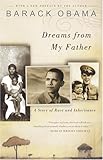
Stephens notes Obama’s first-hand encounter with corruption in Africa in Dreams from My Father, specifically the government-owned monopoly that controls coffee exports in Kenyan. Stephens quotes a farmer’s lament (page 352 according to Google books):

"'The Kenyan Coffee Union. They are thieves. They regulate what we can plant and when we can plant it. I can only sell my coffee to them, and they sell it overseas. They say to us that prices are dropping, but I know they still get one hundred times what they pay to me. The rest goes where?' Francis shook his head with disgust. 'It's a terrible thing when the government steals from its own people.'"
Another Google book on the Kenyan one-party state (by Jennifer Widner of Princeton) notes that in the 1980s, the government either eliminated or marginalized the two organizations that once represented farmers’ interests, to minimize the political voice and economic returns that the coffee growers gain from their efforts.

Stephens guesses that this encounter was on the president’s mind during his speech Saturday in Ghana, which Stephens calls “by far the best of his presidency.” As Stephens writes:
Here's some of what Mr. Obama said: "No business wants to invest in a place where the government skims 20% off the top." "The purpose of foreign assistance must be creating the conditions where it's no longer needed." "The West is not responsible for the destruction of the Zimbabwean economy over the last decade, or wars in which children are enlisted as combatants." "We must support strong and sustainable democratic governments." "America can also do more to promote trade and investment." "We have a responsibility to support those who act responsibly and to isolate those who don't, and that is exactly what America will do." "History shows that countries thrive when they . . . create space for small and medium-sized businesses that create jobs."

All this is not only true, it's groundbreaking. Since British Prime Minister Harold Macmillan gave his "Wind of Change" speech (also in Ghana) nearly 50 years ago, Western policy toward Africa has been a matter of throwing money at a guilty conscience (or a client of convenience), no questions asked. The result, as Mr. Obama pointed out, was that countries such as Kenya, which had a larger GDP than South Korea in 1961, "have been badly outpaced."

Maybe it took a president unburdened by that kind of guilt to junk the policy. Or maybe it simply took a conversation with some of the Francises of Africa -- the politically invisible middle classes held down by their own kleptocratic rulers. Whatever the case, Africa will be well served if Mr. Obama can make good on his rhetoric.
(Stephens laments the disconnect between Obama’s desire for government transparency in Africa though not in the US — which may be true, but distracts from the importance of the main topic: achieving economic development for the 800 million residents of sub-Saharan Africa.)

Economist William Easterly of NYU also praised elements of the speech, specifically the recognition that Western aid to African governments has failed (and will always fail) to pull the Africans up from their poverty. Like Easterly, Chris Blattman of Yale felt parts of it soft-pedalled the needs for change.
Also, though I share some of Easterly's fears on foreign aid gone military, I generally feel like peacekeeping does more good than harm. I've just come back from Liberia, and a well-financed, well-timed UN mission is a thing of wonder.

But not all conflict is ended at the barrel of a gun. Where Bush was supremely successful was pushing African leaders to end war. In Liberia, South Sudan, Uganda, Cote d'Ivoire, Sierra Leone (the list goes on) leaders got a simple message: stop the fighting, now. Most often, the threat wasn't one of force, it was an economic and diplomatic one. I would like to think Obama will keep this up, but he didn't say so in his speech. Rather, he pointed to the barrels of America's guns.
As recently demonstrated in Central America, even the best political institutions are often fragile, and thus ending revolution and war can be an ongoing struggle.

Of course, not everyone loved the speech, particularly those activists wedded to blaming the former imperialists for Africa’s problems decades later. Thus it was encouraging to see an interview with the President of Liberia acknowledge the need of African countries to solve their own problems
BBC: Basically, President Sirleaf, if I could summarize, Barrack Obama was saying to you, the leaders of Africa, that you need to step up your game, will you rise up to the challenge

[President President Ellen Johnson] Sirleaf: Yes, I think that’s exactly what he was saying, and I think that each African leader myself included, will be charged to rise to the challenge, of promoting good governance, and that means vibrant civil society as he said, that’s freedom of the press, accountability, transparency, honesty, fighting corruption, the rule of law… and so yes I think each African Country will determine the policies and measures they use to meet the challenges, but I think those challenges are being met in many Countries already, and more, I think ,will be able to do so, because that’s the only way that we will also meet the call for an inter-dependent world. That’s what he talked about…

BBC: I’m listening to President Obama there, if I may interrupt you there, this speech makes it clear that for him, democracy and good governances is not just about holding elections, it’s about leaders not enriching themselves, getting rid of bribery and corruption, can you do that?

Sirleaf: we must do that! Each of our Country has to face this in different measures, Liberia is facing it, it’s been entrenched, systemic for a while, we are taking measures to do that, we must! because if we don’t then we will not be able to get the transformation that we all seek, and so in that respect you are absolutely correct.
I think everyone in the West should be rooting for the success of democratic Africa and its implications for freedom in the world. The economic success of Singapore allowed some to claim that the path to economic growth only required a benevolent dictator to do the right thing — Africa, like Latin America, has had generations of dictators, few of them benevolent.

India is attempting a messy and sometimes difficult path to demonstrate that economic development can come through free markets, democracy, transparency and accountability. Let us hope that at least some countries in Africa (Kenya, Ghana, Liberia) can emulate that path in the short run, offering hope to the rest of the continent (as Chile does in South America) by demonstrating a path out of poverty and tyranny.

This issue is salient to me on a number of levels, in a way that wasn’t true a year ago. Last November I had the honor of visiting Chile to speak about open innovation. Before going, and while there, I learned a little about its difficult but unique path towards economic freedom (far ahead of anywhere else in Latin America or Africa ).

More recently, a few weeks ago the eldest son of my wife’s best friend (Aaron) graduated from Stanford and began a new job in Rwanda. His company, funded by private investors from Little Rock, is attempting to fuel economic development through trade, beginning with its purchase Saturday of a defunct coffee warehouse in Kigali.

It is only the latest effort by Little Rock investors to help Rwanda. As Aaron explains it, the private investment efforts from Arkansas are a direct result of friendship ties developed by an American-educated John Rucyahana, a Rwandan Anglican bishop who came to Little Rock in 1998 to sponsor a new Anglican parish there that later became the Anglican Mission in the Americas.

Thursday, June 18, 2009

First, assume omniscient regulators

From an editorial Thursday by the WSJ

Hope vs. Financial Experience
Next time, we're told, the regulators will have 20-20 foresight.

The main idea behind the Obama Administration's new financial revamp is essentially this: With more power and a modest reshuffling of the bureaucratic furniture, the same regulators who missed the last credit mania will somehow prevent the next one. If nothing else, this concept is certainly true to President Obama's campaign theme of "hope."
...
For all of its systemic worry, the Treasury proposal doesn't really address the biggest cause of risky financial business: the fact that some institutions have become too big to fail. ...

The danger is that once the market understands these banks are too big to fail, the banks themselves and their lenders will begin to consider them to be like Fannie and Freddie. Their cost of funds would become cheaper than those of smaller competitors, and the incentive could be for more and more institutions to get bigger to rate the "systemic" brand of too big to fail.

This is the moral hazard that Paul Volcker mentioned in recent remarks that we excerpted Tuesday but that goes unaddressed in the Obama plan. ...

The larger question is why all of this regulatory reshuffling needs to be done so quickly, when we are still too close to the mania and panic to have truly absorbed their policy implications. The political class wants to rush through something to claim it has solved the problem, even if it means creating new and different problems later.
From a speech by former Federal Reserve chairman Paul Volcker on June 11:
Another important common concern is the "too big to fail" syndrome -- the presumption that an institution is so large or so inter-connected with counterparties that its creditors (possibly even shareholders) must be protected. One unfortunate consequence of the massive public assistance provided both banks and nonbanks in dealing with the present crisis is that moral hazard may, I am afraid, become more deeply embedded.
“Too big to fail” created a moral hazard that got us into this mess. Doesn’t anyone remember Fannie Mae?

Of course, if we had perfectly honest and perfectly prescient executives and regulators, we wouldn’t need institutions, controls and laws. The perfectibility of humans or human systems is (most recently) a socialist delusion not supported by any evidence from 300+ generations of recorded human history.

Friday, May 22, 2009

Nationalized and free markets

The NYT report this morning on the pre-packaged GM bankruptcy makes it clear that the Obama administration is going to force the Chrysler model of cramdown on the GM bondholders:

A coalition of small bondholders protested the terms of G.M.’s offer in Washington on Thursday. Larger, institutional bondholders have also opposed the deal, which calls for them to receive 225 shares of G.M. stock in exchange for each $1,000 worth of debt.
…
G.M., which is subsisting on $15.4 billion in government loans, has until June 1 to meet the broad criteria for restructuring spelled out by a special presidential auto task force.

Under a plan announced last month, the Treasury Department would control at least 50 percent of the stock in a restructured G.M. A health care trust for union retirees would have about 39 percent, with bondholders getting 10 percent and current shareholders the remaining 1 percent.

Advisers to a committee of G.M.’s biggest bondholders, representing about 20 percent of the $27 billion in bond debt, have repeatedly criticized the plan as unfair and designed to fail. They have also accused the government of seeking to use them as scapegoats for a potential bankruptcy filing. Under their own proposal, G.M. bondholders would own 58 percent of the reorganized carmaker. These advisers have said that they are willing to negotiate with the company and the government but have made no headway thus far.
Bankruptcy courts have given priority to the claims of creditors, not to keeping the company running. In the 2006 bankruptcy of Tower Records, the court chose a liquidation plan over a plan to keep the company running, because its bid was 0.3% higher and thus would give more money to creditors.

Now it is clear that there are two sectors of the American economy: one where the government will use its power to impose the solution it thinks best, and one where investment and the allocation of rights is governed by the rule of law.

Investors who put their money into the nationalized sector — whether in equities or bonds — have to realize that their rights as investor/lenders will be subordinated to the national government’s industrial policy. The business school term for this is “political risk,” normally referring to third world countries where the rule of law is not yet established.

In this case, people who bought Chrysler or GM bonds assumed they would be given preference in liquidation, but the rules changed with the new administration. Knowing what they know now, any Chrysler or GM bondholder should have sold their bonds on November 5 or even earlier.

There is no reason to think this is the last example of political risk under the new government’s policies. The intervention is normally justified in the name of helping struggling industries and saving jobs — which means autos and banking are nationalized sectors. Other industries are in deep trouble — newspapers, Hollywood, real estate — will these be nationalized too?

Where will the government draw the line? Energy is a central part of the administration’s new economic policies — will it be controlled the same way as the automakers and the TARP banks?

For every seller, there’s a buyer. Anyone buying such debt is hoping that there will be political pushback that stops the administration (unlikely) or that the economy has bottomed out and no more firms will be facing bankruptcy (also unlikely).

Wednesday, May 20, 2009

Single party politics and economic stagnation

As part of outsourcing economic criticism in these hard times, I quote from Arnold Kling (on the libertarian economists' blog EconLog) about the possibility of a one-party America and the third-world economy it would bring (emphasis mine):

I am in the middle of reading Violence and Social Orders, by Nobel Laureate Douglass North, John J. Wallis, and Barry R. Weingast (NWW). The theme of the book is that political and economic development is part of the same process, which they call the social order. The developed world enjoys an open-access order, in which both politics and economics are highly competitive. The rest of the world is in a natural state, in which only the members of the governing coalition are fully free to own property, participate in the political process and—most importantly—form durable organizations.

The United States is currently taking a giant step backward in the direction of a natural state. NWW would say that we are still an open-access order. However, the importance of the rule of law is declining, and the importance of political connections to the elite is increasing. I think we will see this trend emerge much more strongly over the next decade, as it becomes clear that the Republican Party is not going to win another national election. Interest groups will lose hope in competitive elections, and instead they will focus on accomodating the Democrats, which in turn will consolidate the power of the ruling party.

In economics this leads to stagnation, as we shift from an economic system dominated by competition and change from the bottom up to a system of rent-seeking and centralized management. There will be less creative destruction and more redistribution.
His fellow EconLog blogger Bryan Caplan disagrees about the likelihood of America becoming a one-party state, but not the consequences if it did happen.